Adhyaya 89: The Wrath of Shumbha and Nishumbha and the Fall of Nishumbha
शुम्भनिशुम्भयुद्धे निशुम्भवधः (Śumbha-Niśumbha-yuddhe Niśumbha-vadhaḥ)
The Pious King
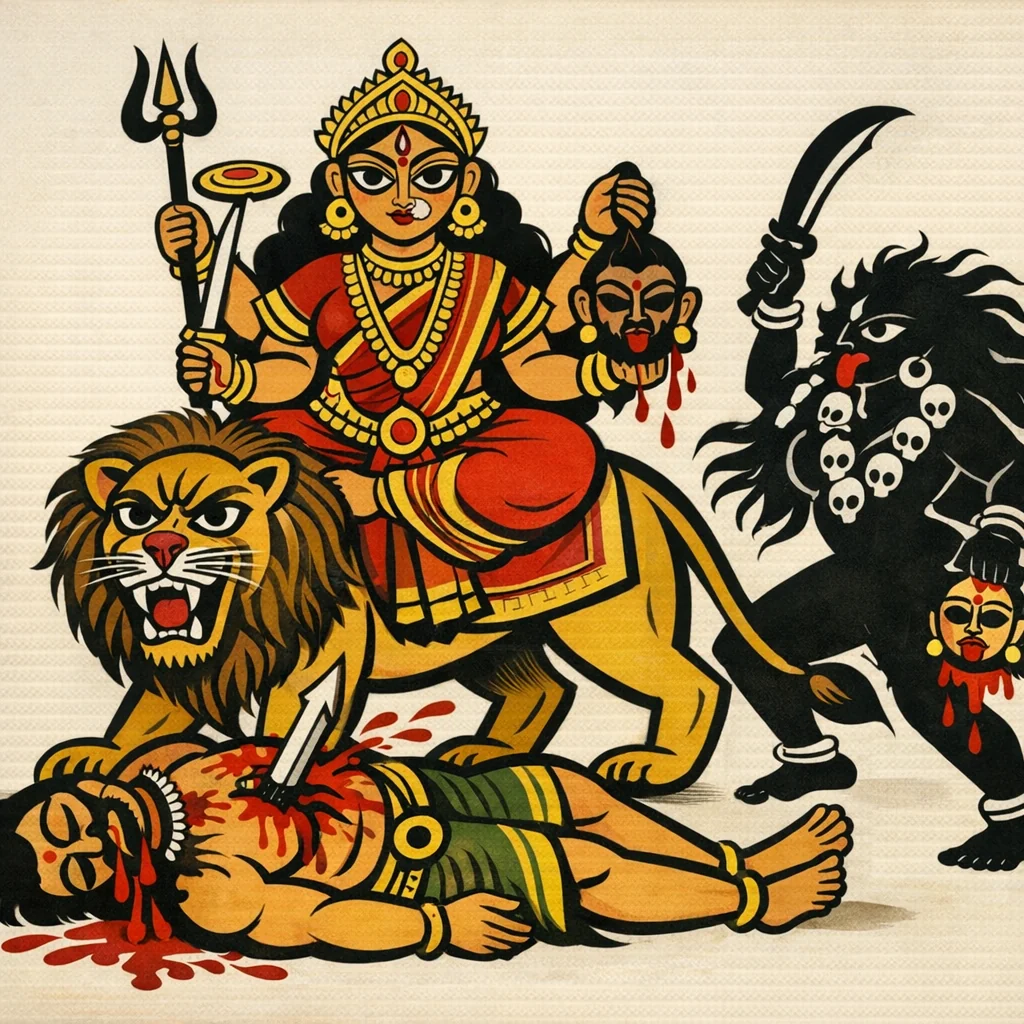
Adhyaya 89, situated within the Devīmāhātmya of the Sāvarṇika Manvantara frame, intensifies the martial theology of the Goddess by narrating the immediate aftermath of Raktabīja’s fall. In response to the king’s inquiry, the ṛṣi continues the account: Śumbha and Niśumbha erupt in unrestrained fury, rallying their forces and pressing the attack upon Caṇḍikā. The battle escalates into a cosmic spectacle—arrows, weapons, and thunderous battle-cries reverberate across the three worlds—while the Goddess orchestrates a coordinated defense with her lion mount and allied śaktis (Kālī/Śivadūtī and the Mātṛkās). Niśumbha repeatedly cycles through weapons and stratagems, yet each is neutralized by the Goddess’s superior force and precision. The narrative culminates in Niśumbha’s decisive impalement and beheading, followed by a catalog-like depiction of the demon host being annihilated by the Mātṛkās, underscoring the doctrinal theme that divine power is both singular and multi-manifest in shaktic theology.
Divine Beings
Celestial Realms
Key Content Points
Focus Keywords
Shlokas in Adhyaya 89
Verse 1
इति श्रीमार्कण्डेयपुराणे सावर्णिके मन्वन्तरे देवीमाहात्म्ये रक्तबीजवधोनामाष्टाशीतितमोऽध्यायः । एकोननवतितमोऽध्यायः— ८९ । राजोवाच विचित्रमिदमाख्यातं भगवन् भवता मम । देव्याश्चरितमाहात्म्यं रक्तबीजवधाश्रितम् ॥
Thus, in the Śrī Mārkaṇḍeya Purāṇa, in the Sāvarṇika Manvantara, within the Devī Māhātmya, ends the eighty-eighth chapter called ‘The Slaying of Raktabīja.’ Now begins chapter eighty-nine. The King said: ‘Venerable sir, you have narrated to me this wondrous account—the glorious deeds of the Goddess centered on the slaying of Raktabīja.’
Verse 2
भूयश्चेच्छाम्यहं श्रोतुं रक्तबीजे निपातिते । चकाः शुम्भो यत्कर्म निशुम्भश्चातिकोपनः ॥
I wish to hear further: when Raktabīja had been slain, what action did Śumbha undertake, and what did Niśumbha, exceedingly wrathful, do?
Verse 3
ऋषिरुवाच चकāर कोपमतुलं रक्तबीजे निपातिते । शुम्भासुरो निशुम्भश्च हतेष्वन्येषु चाऽहवे ॥
The sage said: When Raktabīja was slain, Śumbha the asura and Niśumbha became filled with incomparable rage, as other warriors too were being killed in the battle.
Verse 4
हन्यमानं महासैन्यं विलोक्ष्यामर्षमुद्वहन् । अभ्यधावन्निशुम्भोऽथ मुख्ययाऽसुरसेनया ॥
Seeing his great army being slaughtered, bearing burning fury, Niśumbha then rushed forward with the chief division of the asura host.
Verse 5
तस्याग्रतस्तथा पृष्ठे पार्श्वयोश्च महासुराः । संदष्टौष्ठपुटाः क्रुद्धा हन्तुं देवीमुपाययुः ॥
Great asuras, in front of her, behind her, and at her sides, enraged and biting their lips, advanced to kill the Goddess.
Verse 6
आजगाम महावीर्यः शुम्भोऽपि स्वबलैर्वृतः । निहन्तुं चण्डिकां कोपात्कृताव युद्धं तु मातृभिः ॥
Then Śumbha too, of great valor, came surrounded by his own forces, intending in anger to slay Caṇḍikā—after having waged battle with the Mothers.
Verse 7
ततो युद्धमतीवासीद्देव्याः शुम्भनिशुम्भयोः । शरवर्षमतीवोग्रं मेघयोरिव वर्षतोः ॥
Then the battle between the Goddess and Śumbha and Niśumbha became exceedingly intense, with a terrible rain of arrows—like two storm-clouds pouring down.
Verse 8
चिच्छेदास्ताञ्चरांस्ताभ्यां चण्डिका स्वशरोत्करैः । ताडयामास चाङ्गेषु शस्त्रौघैरसुरेश्वरौ ॥
Chandika cut down those (missiles/weapons) with volleys of her own arrows, and then struck the two lords of the Asuras upon their limbs with torrents of weapons.
Verse 9
निशुम्भो निशितं खड्गं चर्म चादाय सुप्रभम् । अताडयन्मूर्ध्नि सिंहं देव्याः वाहनमुत्तमम् ॥
Nishumbha, taking up a sharp sword and a brightly shining shield, struck upon the head the lion—the excellent mount of the Goddess.
Verse 10
निशुम्भो निशितं खड्गं चर्म चादाय सुप्रभम् । अताडयन्मूर्ध्नि सिंहं देव्याः वाहनमुत्तमम् ॥
Nishumbha, taking up a sharp sword and a splendid shield, struck the lion—the Goddess’s excellent mount—upon the head.
Verse 11
छिन्नॆ चर्मणि खड्गे च शक्तिं चिक्षेप सोऽसुरः । तामप्यस्य द्विधा चक्रे चक्रेणाभिमुखागताम् ॥
When his shield and sword were cut down, that Asura hurled a spear; but her discus split even that into two as it came straight toward her.
Verse 12
कोपाध्मातो निशुम्भोऽथ शूलं जग्राह दानवः । आयातं मुष्टिपातेन देवी तच्चाप्यचूर्णयत् ॥
Then Nishumbha, swollen with wrath, the Danava seized a trident; and as it came at her, the Goddess crushed it to powder with a blow of her fist.
Verse 13
अथादाय गदां सोऽपि चिक्षेप चण्डिकां प्रति । सापि देव्याः त्रिशूलेन भिन्ना भस्मत्वमागता ॥
Then he too, taking up a mace, hurled it at Chandika; and that (mace) as well, split by the Goddess’s trident, was reduced to ashes.
Verse 14
ततः परशुहस्तं तमायान्त दैत्यपुङ्गवम् । आहत्य देवी बाणौघैरपातयत भूतले ॥
Then, as that foremost of Daityas approached with an axe in his hand, the Goddess struck him with torrents of arrows and cast him down upon the ground.
Verse 15
तस्मिन्निपतिते भूमौ निशुम्भे भीमविक्रमॆ । भ्रातर्यतीव संक्रुद्धः प्रययौ हन्तुमम्बिकाम् ॥
When Nishumbha of dreadful prowess had fallen to the ground, (his) brother, exceedingly enraged, advanced to slay Ambika.
Verse 16
स रथस्थस्तथात्युच्चैर्गृहीतपरमायुधैः । भुजैरष्टाभिरतुलैर्व्याप्याशेषं बभौ नभः ॥
Seated upon his chariot, holding aloft his supreme weapons, and with his eight incomparable arms, he filled the whole expanse and shone across the sky.
Verse 17
तमायान्तं समालोक्य देवी शङ्खमवादयत् । ज्याशब्दं चापि धनुषश्चकारातीव दुःसहम् ॥
Seeing him advancing, the Goddess blew her conch; and she also made the twang of her bowstring—exceedingly unbearable (for the foes).
Verse 18
पूरयामास ककुभो निजघण्टास्वनेन च । समस्तदैत्यसैन्यानां तेजोवधविधायिना ॥
She filled the quarters with the sound of her own bell—an awe-inspiring clang that shattered the spirit and splendor of the entire host of demons.
Verse 19
ततः सिंहो महानादैस्त्याजितेभमहामदैः । पूरयामास गगनं गां तथैव दिशो दश ॥
Then the lion, with mighty roars that drove away the rut-maddened elephants, filled the sky, the earth, and likewise the ten directions.
Verse 20
ततः काली समुत्पत्य गगनं क्ष्मामताडयत् । कराभ्यां तन्निनादेन प्राक्स्वनास्ते तिरोधिताḥ ॥
Then Kālī sprang up and struck the sky and the earth; by the thunder of her two hands, the earlier sounds were completely drowned out.
Verse 21
अट्टाट्टहासमशिवं शिवदूती चकार ह । तैः शब्दैरसुरास्त्रेसुः शुम्भः कोपं परं ययौ ॥
Śivadūtī uttered a dreadful, inauspicious burst of laughter; at those sounds the asuras shot their weapons, and Śumbha was seized by extreme rage.
Verse 22
दुरात्मंस्तिष्ठ तिष्ठेति व्याजहाराम्बिका यदा । तदा जयेत्यभिहितं देवैराकाशसंस्थितैः ॥
When Ambikā cried out, “Wretch—stand, stand!”, then the gods stationed in the sky proclaimed, “Victory!”
Verse 23
शुम्भेनागत्य या शक्तिर्मुक्ता ज्वालातिभीषणा । आयान्ती वह्निकूटाभा सा निरस्ता महोल्कया ॥
A blazing, terrifying power that Śumbha released—coming like a mass of fire—was struck aside by a great meteor-like projectile.
Verse 24
सिंहनादेन शुम्भस्य व्याप्तं लोकत्रयान्तaram् । निर्घातनिः स्वनो घोरो जितवानवनिपते ॥
O king, the space within the three worlds was filled with Śumbha’s lion-like roar—a dreadful, thunderous reverberation, as though it had conquered all.
Verse 25
शुम्भमुक्ताञ्छरान्देवी शुम्भस्तत्प्रहिताञ्छरान् । चिच्छेद स्वशरैरुग्रैः शतशोऽथ सहस्रशः ॥
The Devī severed the arrows released by Śumbha, and Śumbha cut down the arrows she sent—each with their own fierce shafts, by the hundreds and then by the thousands.
Verse 26
ततः सा चण्डिका क्रुद्धा शूलेनाभिजघान तम् । स तदाभिहतो भूमौ मूर्च्छितो निपपात ह ॥
Then Caṇḍikā, enraged, struck him with her trident; hit thus, he fell to the ground, fainting and senseless.
Verse 27
ततो निशुम्भः सम्प्राप्य चेतनामात्तकार्मुकः । आजघान शरैर्देवीं कालीं केसरिणं तथा ॥
Then Niśumbha, regaining his senses and taking up his bow, struck with arrows the Devī, Kālī, and the lion as well.
Verse 28
पुनश्च कृत्वा बाहूनामयुतं दनुजेश्वरः । चक्रायुधेन दितिजश्छादयामास चण्डिकाम् ॥
Then again, the lord of the Danu-born demons manifested ten thousand arms, and that son of Diti covered (overwhelmed) Caṇḍikā with his discus-weapons.
Verse 29
ततो भगवती क्रुद्धा दुर्गा दुर्गार्तिनाशिनी । चिच्छेद तानि चक्राणि स्वशरैः सायकांश्च तान् ॥
Then the Blessed Goddess, enraged—Durgā, the destroyer of the distress of the difficult—cut those discuses down with her own arrows, and also those missiles.
Verse 30
ततो निशुम्भो वेगेन गदामादाय चण्डिकाम् । अभ्यधावत वै हन्तुं दैत्यसेनासमावृतः ॥
Then Niśumbha, seizing his mace and rushing with speed, charged to kill Caṇḍikā, surrounded by the army of the Daityas.
Verse 31
तस्यापतत एवाशु गदां चिच्छेद चण्डिका । खड्गेन शितधारेण स च शूलं समाददे ॥
As he rushed in, Caṇḍikā swiftly cut his mace with her sharp-edged sword; and he then took up a spear (trident-like lance).
Verse 32
शूलहस्तं समायान्तं निशुम्भममरार्दनम् । हृदि विव्याध शूलेन वेगाविद्धेन चण्डिका ॥
As Niśumbha approached with spear in hand—he who tormented the gods—Caṇḍikā pierced him in the heart with a spear hurled with force.
Verse 33
भिन्नस्य तस्य शूलेन हृदयान्निः सृतो 'परः । महाबलो महावीर्यस्तिष्ठेति पुरुषो वदन् ॥
When he was split by that spear, another person emerged from his heart, mighty and of great valor, saying, “Stand (and face me)!”
Verse 34
तस्य निष्क्रामतो देवी प्रहस्य स्वनवत्ततः । शिरश्चिच्छेद खड्गेन ततो 'सावपतद्भुवि ॥
As he came forth, the Goddess laughed aloud with a ringing sound and cut off his head with her sword; then he fell to the ground.
Verse 35
ततः सिंहश्चखादोग्रं दंष्ट्राक्षुण्णशिरोधरान् । असुरांस्तांस्तथा काली शिवदूती तथापरान् ॥
Then the lion fiercely devoured those asuras whose necks were crushed by his fangs; likewise Kālī and Śivadūtī (the messenger of Śiva) dealt with others (of the demons).
Verse 36
कौमारीशक्तिनिर्भिन्नाः केचिन्नेशुर्महासुराः । ब्रह्माणीमन्त्रपूतेन तोयेनान्ये निराकृताः ॥
Some great asuras fell, split open by Kauṃārī’s spear; others were repelled (destroyed/warded off) by Brahmāṇī with water sanctified by mantras.
Verse 37
माहेश्वरीत्रिशूलेन भिन्नाः पेतुस्तथापरे । वाराहीतुण्डघातेन केचिच्चूर्णोकृताः भुवि ॥
Others fell, split by Māheśvarī’s trident; and some were crushed to powder on the ground by the blows of Vārāhī’s snout.
Verse 38
खण्डं खण्डं च चक्रेण वैष्णव्या दानवाः कृताः । वज्रेण चैन्द्रीहस्ताग्रविमुक्तेन तथापरे ॥
The Danavas (demons) were cut into fragments by the discus of Vaishnavi, and others were destroyed by the thunderbolt released from the fingertips of Aindri.
Verse 39
केचिद्विनेशुरसुराः केचिन्नष्टा महाहवात् । भक्षिताश्चापरे कालीशिवदूतीमृगाधिपैः ॥
Some demons perished, some fled from the great battle, and others were devoured by Kali, Shivaduti, and the Lion.
Frequently Asked Questions
The chapter advances a shaktic theological claim rather than a moral casuistry: when adharma consolidates as coercive power (asura sovereignty), it is countered by the Goddess as decisive, world-protecting śakti—simultaneously singular in authority and plural in manifestation through her allied powers.
Within the Sāvarṇika Manvantara setting of the Devīmāhātmya, this adhyāya functions as a crisis-resolution unit: the cosmic disorder introduced by the asuras is narrowed from an army-wide threat to the elimination of a principal antagonist (Niśumbha), preparing the narrative for the final confrontation with Śumbha.
It provides a core battle-sequence of the Devīmāhātmya: Niśumbha’s defeat by Caṇḍikā, the prominent presence of Kālī/Śivadūtī, and a distinct Mātṛkā-catalog of demon-slaying—elements that reinforce the tradition’s doctrine of the Goddess’s supreme, multi-form martial potency.
Read Markandeya Purana in the Vedapath app
Scan the QR code to open this directly in the app, with audio, word-by-word meanings, and more.